Wednesday, December 1, 1999

Véra (Mrs. Vladimir Nabokov): Portrait of a Marriage, by Stacy Schiff


A Review of Stacy Schiff’s

Véra (Mrs. Vladimir Nabokov):

Portrait of a Marriage


Originally published in the Rain Taxi Review of Books, Winter 1999/2000


By Stacy Schiff
Random House ($27.95)


When asked about his wife’s relation to his fiction, Vladimir Nabokov once declared that “most of my works have been dedicated to my wife, and her picture has often been reproduced by some mysterious means of reflected color in the inner mirror of my books.” Always coy, Nabokov failed to mention that his wife, Véra, was also the work’s typist, editor, translator, researcher, and first (and only intended) reader—as well as the author’s secretary, teaching assistant, chauffeur, accountant, ghost-correspondent, cook, and, for many years, financial supporter. But because she retreated so insistently to the background, biographers and critics have always had difficulty putting her in context to the man and to the work. Even Nabokov leaves her nameless in his memoir, Speak, Memory, so what biographer Stacy Schiff has set out for herself is the dauntingly Nabokovian challenge of separating ghostly fact from ghostly fiction.

As with her life, however, Nabokov also dominates her biography. Perhaps there isn’t enough information on Véra herself for Schiff to write anything more than just another Nabokov biography. But since Schiff only spends about twenty pages on the pre-Nabokov Véra, who met her husband when she was twenty-one, and about fifteen pages on the post-Nabokov Véra, who outlived him by thirteen years, the book’s slapped-on subtitle, “Portrait of a Marriage,” seems more accurate than its chosen title, Véra.

Still, looking at Véra and Vladimir as “the Nabokovs”—or as their collaborative moniker, VN—yields interesting surprises. It was after meeting Véra that Nabokov, who was known as a poet, began writing novels. And the meeting itself—Véra sent him a note instructing him to meet her on a bridge, where she arrived wearing a mask—surely informed the nature of his future work. But as the biography progresses, Schiff seems little interested in separating Véra from the masked variations of her that appear in her husband’s novels. And she’s so obsessed with Nabokov’s dopplegängers and mirror images that she projects them onto Véra, often citing the work to make sense of the life.

When the book succeeds at getting near its ostensible subject, however, it shocks the reader with Véra’s oddly amazing presence. By any account a genius, she had almost perfect recall—far better than her famously mnemonic husband—read much more widely than is conceivable, spoke four languages fluently (later learning enough Italian and Swedish to help translate her husband’s novels), and more or less did everything for Vladimir but compose his books. While he wrote, she worked, helped to prepare his lectures, delivered them when he was sick or away, kept up his correspondence, made hard-nosed deals with publishers, and performed almost superhuman amanuensic feats.

All this excellence, however, made the real world a little hazy for Véra Nabokov. In Germany in the 1930s, she was almost blindly oblivious to the Nazis (Véra was Jewish). And as the literary life wore on, dirt-poor or not, she never let go of her old-world prejudices. For all her genius, Véra Nabokov was deeply homophobic, seemingly unaware of feminism, rabidly right-wing (she supported McCarthy and befriended William F. Buckley), was a complacent war-profiteer (she invested Lolita money in McDonnell Aircraft during the Vietnam war), and, to top it all off, she carried a gun.

Not least important, though, she was a woman who for better or worse subjugated her genius to that of her husband—a subject that Schiff handles poorly, not once addressing the relationship in feminist terms. But for all her apologies—and despite her horribly clunky, faux-Nabokovian prose—Schiff somehow succeeds in transmitting her awesome affection for Véra Nabokov to the reader. Which is probably as close as we’ll ever get to the elusive Mrs. Vladimir Nabokov.


—David Wiley


Wednesday, September 1, 1999

Pu-239 and Other Russian Fantasies, by Ken Kalfus


A Review of Ken Kalfus


Pu-239 and Other Russian Fantasies


Originally published in the Rain Taxi Review of Books, Fall 1999


By Ken Kalfus
Milkweed ($22)


Arriving on the heels of his first collection, Thirst, Ken Kalfus’ new story collection, Pu-239 and Other Russian Fantasies, marks a radical leap forward for its author. Wildly overrated by just about everyone, Thirst was long on plot and short on tone, texture, character, and just about everything else a story collection needs. With the exception of a few isolated flights of fantasy, the collection read like Ron Carlson on an off day. But Pu-239 reads like nobody but Ken Kalfus.

Not without its flaws, however, Pu-239 starts off only a little past where Thirst left off. The title story, although terrifying plot-wise, sacrifices real characterization as it recounts the rapid succession of events that follow when a doomed power plant worker tries to sell a canister of plutonium on the Russian black market. Not only is the premise straight out of a Sean Connery/Alec Baldwin vehicle, it moves so quickly that any attempt at giving it texture ends up sounding awkward and forced. The overall effect is chilling, though, and when the story reaches its astonishing conclusion, it becomes clear that Kalfus has done an expert job of planting the seeds of post-story fallout in the reader’s mind.

While the breakneck opening story may grab the reader’s attention, it’s Kalfus’ longer stories that allow him to do what he does best. In “Birobizhdan” Kalfus tells the story of Jewish patriots who lay the groundwork for an autonomous Jewish state in the eastern part of the Soviet Union. Not only is the story absolutely compelling, but Kalfus employs ingeniously effective storytelling strategies that open up profound narrative explorations without slowing the story down at all. Perhaps the most brilliant section is when a group of Jews, led by the politically gung-ho Israel, sets out on their trainride east. The stops and starts, the interminable delays and setbacks, the increasing hostility at each stop, and the relentless determination to keep moving all mirror the story itself as it chugs toward its destiny. And of course there’s the unspoken implications of Jews heading east on a train, with the imminent Soviet betrayal foreshadowing Europe’s betrayal in World War II. Ominous, indeed.

The novella “Peredelkino” is a bit less successful than “Birobizhdan,” but it covers almost as much ground as it traces the vertiginous ups and downs of a Soviet writer’s career. As in Thirst, Kalfus is most successful when he tests the limits of his storytelling powers, but postmodernism is unfortunately still a little beyond his reach, as the garbled “Bodyonnovsk” attests. But the hilarious fairy tale “Salt” achieves a near-perfect tone as it explores the disparity between money and value.

The only real bummer about Pu-239 is that it draws a fairly sharp line between reality and fantasy. The realities that Kalfus evokes can be so darkly surreal, however, that even at their most direct and devastating, they mimic the mind’s hazy mediation. And even though he keeps the surface level fairly straight, Kalfus makes the reader keenly aware of the nuclear dimensions packed within the boundaries of Newtonian fiction.


—David Wiley


Tuesday, June 1, 1999

Jorge Luis Borges’ Collected Fictions (review #2)


A Review of Jorge Luis Borges’ Collected Fictions


Originally published in the Rain Taxi Review of Books, Summer 1999


By Jorge Luis Borges
Translated by Andrew Hurley
Viking ($40)


Lamenting the exhaustion of literary forms and ideas in the wake of Modernism, Cynthia Ozick once wrote, “after Kafka, after Borges, what is there to do but mope?” She answers the question immediately with a discussion of Italo Calvino, one of the most inventive of the post-Borgesians (everything after 1944 is post-Borgesian), but the sentiment lingers. Building one of the most towering fictional—and often fictitious—catalogs in modern literature, Borges wrote with infinity in mind. Writing in Spanish, though, it took a while for his infinities to infiltrate the rest of the world’s literature, and over the years most of us have had to make do with teasing samplers and greatest-hit packages, only guessing at the labyrinths hidden just a little south of the equator. But now, with Collected Fictions, the tower of labyrinths stands tall—freshly translated and, like the encyclopedic world of “Tlön, Uqbar, Orbis Tertius,” poised to preclude any other reality.

In truth, this volume only collects the fictions written solely by Borges himself, omitting the works he produced in collaboration. Most sorely missed are the stories penned by “H. Bustos Domecq,” the collaborative pseudonym of Borges and his friend Adolfo Bioy Casares. But at 565 pages, Collected Fictions amply attests to Borges’ singular genius. Beginning with his first fiction collection, A Universal History of Iniquity, and ending with the prose pieces from Shakespeare’s Memory—and omitting all works of poetry, essay, and autobiography—the collection focuses on what made Borges famous: his stories. A notorious trickster, however, Borges often disguises essays as fiction, fictions as essays, and tosses in poetry and autobiography everywhere so that genre boundaries are almost completely blurred.

Written with an almost mathematical rigor and employing a dizzying combination of the tangible and the infinite, Borges’ stories reveal a world of palimpsests existing simultaneously with our own. To read Borges is to feel an eerie sense of recognition—recognition of spaces and times that we always knew existed somewhere in some catalog of possibilities but which we’d left filed away because we’d been incapable of fully imagining them.

Perhaps the most representative of these possibilities is “The Library of Babel,” a mind-boggling account of a universal library containing every book with every possible combination of letters. Laying out the librarian’s tangible world with a precision reminiscent of (and inspired by) Kafka’s “Metamorphosis,” the story mirrors our own world by exploring the limits of human comprehension. It’s impossible that the library is infinite, as there’s only a finite number of lexical variations, but it’s also impossible that the library could have outer boundaries, that somewhere there’s a place that the library doesn’t exist. And of course within the library are librarians, each one a Borges forced to deal with the awful parameters of his universe.

Another sense a Borges reader gets is that the stories are all variations—or rather versions. Not of the same story, but of the infinite stories that exist everywhere. His earlier works are all sly combinations of the original and the stolen, and his Internet-speed erudition links it all together in a way that makes it impossible to tell what’s made up or who made it up. Gaining momentum quickly, Borges’ second collection, Ficciones, finds him in full command of the genre, but it’s even clearer that, no matter how brilliant and original he is, he’s more of a medium for the infinite than an autonomous creator. It’s Ficciones that contains “The Library of Babel,” as well as the masterful “Funes the Memorious,” an examination of memory and the mind’s relationship to the world. Funes, a character as memorable—and elusive—as any in modern literature, serves as a metaphor for Borges’ sleepless battle with memory, his inability to forget illuminating Borges’ role as cipher for the universe’s stories.

As for this specific collection, translator Andrew Hurley has done a tremendous job with such a Babel-sized catalog. Translating Borges’ earlier, more poetic works as clearly and as sharply as his later, more pared-down ones, Hurley gives us an almost seamless view of the Borges world. Not without his idiosyncrasies, though, Hurley makes a few weird word choices (e.g. “gaol” for “jail”) and adds inconsistent (and sometimes Kinbotian) annotation. He also dismisses the word “memorious” as “Lewis Carroll-esque” (I can think of no greater compliment) and re-translates the title as “Funes, His Memory.” But these are quibbling criticisms. By giving us access to so much Borges in one place, Hurley has done an awesome service to the English language. As long as we can get over moping about how little Borges has left for us to do, this collection is likely to inspire English-language readers and writers to re-discover just what the a mind can do when faced with an infinity of fictional possibilities.


—David Wiley


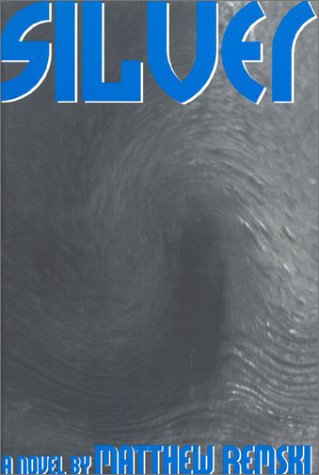
Silver, by Matthew Remski


A Review of Matthew Remski’s Silver


Originally published in the Rain Taxi Review of Books, Summer 1999


By Matthew Remski
Insomniac Press ($14.99)


Rick Moody wrote in his review of Mason & Dixon that writers of his generation have exactly one author with whom they must come to terms: Thomas Pynchon. This is hyperbole, to be sure, but it’s no exaggeration to say that many of our best writers work in the shadow of Gravity’s Rainbow in the way that folks like William Faulkner and William Gaddis worked in the shadow of Ulysses. William T. Vollmann and David Foster Wallace come instantly to mind, as do Carol De Chellis Hill and Richard Powers. Each of these writers is powerful enough and original enough to stand without GR as a crutch, but the influence is undeniable, and not talking about it would be like playing a game of literary Taboo. So then what’s a young, hyper-smart literary wunderkind to do but tackle the Rainbow head on?

This is exactly what Matthew Remski does in his new novel, Silver. Not just a Pynchon-esque novel, Silver is a long improvisation/meditation on Gravity’s Rainbow and its author, written almost exactly in Pynchon’s style. Hardly coy about his approach, Remski names his main character Tyrone Pynchon, fusing GR’s protagonist Tyrone Slothrop with Pynchon himself, and sets him down in pre-War Germany as an erudite, paranoid, and dissolute correspondent for the News of the World. Pynchon gets his NOW assignments through elaborately cabalistic means, sent by editors he’s never met, and the novel begins with him finding instructions tattooed in a Lewis Carroll-like spiral around a chance lover’s asshole: “Go to Berlin. Check out Mengele and the violinist, plus the Riefenstahl virus. Also look into the bunny trade….”

Resigned, Pynchon heads for the Reichstag, where his journalist’s credentials allow him to observe all manner of Nazi perversity. The violinist in question is a young Jew named Ghimel whose hands have been amputated and switched, his ability to re-learn the violin proving Mengele’s theory of the “ambidextrous and therefore unnatural, lawless, and uncentred nature of the Semite.” Ghimel serves as entertainer/lackey for the Nazi revelers, and his wrist wounds set up a powerful crucifixion motif that Remski explores throughout the rest of the novel.

Present in various capacities are Leni Riefenstahl, Josef Mengele, Klaus Barbie, and Hitler, as well as Hans Hugo Heffner, rabbit breeder, and Andrei Lupus Weber, Party composer. Mixing these historical and quasi-historical figures together, Remski addresses another of the book’s central motifs: the pornography of image, as illustrated by everything from film and propaganda to children’s toys (i.e. “Barbie” dolls). If there’s a central image to Silver, the way the Rocket is the central image to GR, it’s the Shroud of Turin—or more accurately a specific negative photograph of the Shroud, which Remski portrays as the ultimate pornography. The silver of the novel’s title refers to the silver used in photography, and the “Riefenstahl virus” is a cloud of silver that surrounds our Nazi pornographers, infecting everyone with whom they come in contact.

What’s interesting about the novel’s structure is that it surrounds Gravity’s Rainbow like Riefenstahl’s cloud of silver. The first forty-five pages all take place before GR, and, excluding a two-page “WWII Segue,” everything else takes place in GR’s aftermath. And true to Pynchon’s vision, Remski charts the Nazi diaspora all over the world. Weber and Eva Perón hit it off when the Nazis go to Argentina, the composer becoming her chief propagandist, and when burger-meister Ray Krok enters the picture, sights begin to be set on the ultimate destination: the States.

Around this point, the novel begins to break apart considerably, following the Rainbow’s trajectory downward into fragmentation. Tyrone Pynchon heads for America, aboard the U.S.S. Television, but he gets sidetracked by Their meddling, and as we see him fall more and more under Their control, he begins to disappear from the novel, à la Tyrone Slothrop. Taking several leaps in time, Silver follows the disparate storylines as they diverge and recross in masterfully orchestrated lurches toward modern-day America. We see Ghimel’s child born and then emigrate to the States. We meet wholly new characters—most notably doomed “Playgoy” bunny Dorothy Stratten—and wait for them to intersect with the rest of the crew. And, most importantly, we watch the Nazi aesthetic infiltrate and infect America.

As in Gravity’s Rainbow, however, there are counterforces at work, if only fatalistic ones—namely the authors Pynchon and Remski themselves. Not nearly as self-indulgent as it sounds, Remski turns the novel into a profound examination of authorship and identity, and even when it gets a little wanky, Remski has volumes to tell us about the nature of reading and writing.

So the question is, with all this rampant Pynchania, is it possible that Silver is a great book? None of the setting or subject matter is Remski’s own, nor are the prose style or pacing. Some of his themes and motifs vary from Gravity’s Rainbow, although not by much. For all of its lack of originality, though, I’d have to say that Silver may be one of the most wildly brilliant—and weirdly original—novels in recent memory. Like the premise of Borges’ story “Pierre Menard, Author of the Quixote,” Silver is an astonishing experiment in mimesis. The prose style is so outrageously Pynchonlike that a few times I thought it was Pynchon and that Matthew Remski was just one of his characters. And when Remski really gets going, he can pull off feats so outlandish that they rival some of Pynchon’s best bits.

Overall, however, Remski is no Pynchon. Nobody is. As brilliant as Remski may be, his vision is much smaller, and his scope far narrower. For all its plenitude, Silver often finds Remski doing the things we expect and understand Pynchon to do—and usually stopping before things get too dense and the counter-counter-counter-plots get too confusing. Nevertheless, Remski is an out-and-out genius. And even though it contents itself with remaining under the Rainbow, Silver just might be a great book.


—David Wiley


Thursday, April 1, 1999

Careless Love: The Unmaking of Elvis Presley, by Peter Guralnick


A Review of Peter Guralnick’s

Careless Love: The Unmaking of Elvis Presley


Originally published in Toast Magazine,

April 1999


Careless Love:
The Unmaking of Elvis Presley
By Peter Guralnick
Little, Brown, $27.95


When Peter Guralnick published Last Train to Memphis, the first volume of his biography of Elvis Presley, it was hailed by fans and critics alike as the first serious treatment of one of our century’s most intriguing figures. Even Elvis’s former manager, “Colonel” Tom Parker, called it “a different kind of book.” Neither an apologetic panegyric nor an exploitative tell-all, it examined in close detail all the facts about the singer’s rise from poverty to unimaginable success and popularity. But that book tells only the first half of the story, covering the time from Elvis’s birth in 1935 to his induction into the US Army in 1958, and now, four years after the publication of the first volume, Guralnick has published Careless Love to complete the story.

Guralnick calls this book a tragedy, and true to his word, Elvis Presley’s ghastly, pathetic, and utterly banal fall more than qualifies him as a tragic figure. The story begins with Elvis on hold in Germany as he waits for his stint in the Army to end and for his reign as King of Rock ’n’ Roll to resume. On top of the world as he’s drafted, Elvis struggles to be seen as just one of the boys, and this may be the first step downward. The ultimate symbol of rebellion and unleashed sexuality, Elvis loses nearly all street credibility when he wholeheartedly embraces the patriotic-young-man role laid out for him. But he wears it so well and is so lovable that we can’t help expecting him to return the same old Elvis.

With the Colonel running things on the home front, Elvis returns to find that he’s as popular as ever. But from his first recording sessions and his appearance on Frank Sinatra’s pathetic welcome-home special, it’s evident that the fire is out. He’s still beautiful and talented (and ten times cooler than Sinatra) but that’s just about it. Gone is the driving fury that transformed both popular music and culture, and in its place we find an adorable automaton. It’s not that Elvis consciously decided to sell out, but it’s evident from listening to the empty virtuosity of songs like “It’s Now or Never” that he was more interested in honing his technique with safe material than with challenging himself or his fans.

And then there are the movies. Elvis saw himself as a Brando or a Dean, but the Colonel saw dollar signs in cute comedies about girls and race cars. Of course, all this is old news to Elvis fans, but Guralnick’s painstaking account brings new depth to Elvis’s struggle both with the Colonel and with his own image. Elvis is profoundly frustrated with the lack of substance and challenge—in his music as well as in his movies—but Guralnick’s portrait shows Elvis as much to blame as his manager. He chooses to be led rather than to lead, and as the Colonel refines his money-making techniques, the paths that Elvis follows become increasingly narrow, in marked contrast to the bold expansiveness that marked his life and work in the 1950s. In elaborate detail, Guralnick recounts the deals that slowly turned Elvis into a laughing stock. We learn how Elvis wasn’t allowed to record a song to which he didn’t own the publishing, and how two-week filming schedules maximized movie profit for everyone involved. The publishing deals insured maximum profit as well, but Elvis had to stop singing Leiber & Stoller songs and start singing songs written by studio hacks—songs like “Ito Eats” and “There’s No Room to Rumba in a Sports Car.” One scene finds Elvis smashing acetate demos against the studio walls in his frustration, but he never objects.

His lifestyle is as disappointing as his artistic situation. Here’s a man with unlimited wealth and opportunity, to whom the world is open, and he spends all his time womanizing and partying in Las Vegas with his entourage. Living on the uppers he discovered in the Army, Elvis and company spend every night going to clubs and bringing countless women back to their hotel rooms. Of course, some of their hijinks are truly hilarious, but mostly they’re boring and sad. It’s not that Elvis lacked culture—although he certainly did; it’s that he had access to so much simple pleasure that he couldn’t imagine pursuing any other path.


Which leads to more boredom as the highs become more and more elusive. Which leads to more womanizing and more pills. In the background of all this is Elvis’s relationship with Priscilla Beaulieu, his stay-at-home girlfriend who he met in Germany when she was just fourteen. Guralnick’s account necessarily lacks the intimacy of Priscilla’s memoir Elvis and Me, but the distance says a lot about how Elvis felt about and treated his wife-to-be. He wanted the nice girl at home, but he just couldn’t help himself when he was faced with women like Ann-Margret on a daily basis.

Again, much of this is old news, but Guralnick explores it all in nearly day-to-day detail, conveying the incredible boredom without ever boring the reader. We find ourselves sleepwalking through life along with Elvis, and as with any great biography, we find ourselves understanding and even getting used to Elvis’s world, which is quite a feat considering how warped and claustrophobic it becomes. Elvis’s bizarre spiritual awakenings, his infantile but strangely touching relationships with women, his ever-changing obsessions—everything we talk about when we talk about Elvis suddenly becomes imaginable and almost rational when viewed this closely. But probably Guralnick’s greatest feat is that as we read we forget how it’s going to end. We rally with Elvis as he puts on a spectacular performance on the 1968 “comeback” special. And when he goes on to record the amazing “Memphis” albums, we have renewed faith, if only for a while. We’re forced to read as if it’s happening now, suspending all we know about Elvis in the hope that he’ll regain the glory we know he’s capable of.

But as in literature, there are harbingers foreshadowing the future. His “comeback” was as much the doing of zealous, true-believer producers as of Elvis himself, and as we see him renewing his enthusiasm, we also know that he’s not really in charge anymore. He’s singing the way people remember him singing, not the way he envisions for himself, and we understand that once these people are gone, Elvis will be adrift again. We want to believe, though, and for a brief moment, as he decides to start touring after almost a decade off the road, we’re the first in line to buy tickets.

Another of Guralnick’s abundant talents is his lack of prejudice when dealing with characters we’ve all made up our minds about—most notably the Colonel. In both volumes Guralnick delves almost as far into the Colonel’s life as into Elvis’s, and what emerges is a multi-dimensional—and utterly fascinating—portrait of Elvis’s real other half. I won’t spoil anything for you, but when Guralnick reveals the long-hidden truth about the Colonel’s background, you’ll realize that he needs a two-volume biography of his own. The only consistent word that anyone in the know uses to describe him is “genius,” and far from being a sinister figure, he truly believes that he has Elvis’s best interests in mind. He falls nearly as drastically as Elvis does, though, and ultimately he’s as responsible for—and as helpless to prevent—his and Elvis’s tandem descent.

Everybody knows the rest of the story—the increasing reliance on “medication,” the freaky religious weirdness, the outrageous spending sprees, the guns, the destructive relationships—but never before has it been this unbearably intimate. Not even Elvis: What Happened?, the tell-all biography by fired bodyguards Sonny and Red West, comes close. Perhaps the most surreal—and most famous—episode is when Elvis meets President Nixon. After hundreds of pages, we’ve become acclimated to Elvis’s world—a world in which he has complete power—and as we see him encountering a truly powerful figure and see how utterly absurd he is in comparison, we can only shake our heads at how comical our hero has become. Nixon’s all-too-real villainy makes Elvis not just seem silly; it makes him seem thoroughly out of touch with any kind of reality, and this may be the book’s final turning point. Before, Elvis was the master of his own warped reality—a reality that we’d bent along with—but now we’re forced to step back in astonishment. Now we realize that Elvis is totally out of it.

From here on, the book is sheer torture to read. The list of drugs, physical maladies, on-stage embarrassments, creative disasters, and emotional upheavals just drags on and on, with Guralnick assigning more and more pages per year as Elvis’s life limps toward death. Everyone sees it coming, but to see it actually happen is almost too much to take. Amazingly, the Presley estate opened its files to Guralnick, so we get to see it all, in all the goriest detail. Again, I won’t ruin it for you, but be warned: If you care about Elvis even just the tiniest bit, this book will break your heart.

It’s hard to make much of a judgment about Careless Love, because its treatment of the subject matter is so engrossing that it’s hard to see the book objectively. It’s difficult to separate Elvis from Guralnick’s book about Elvis, which I guess is the best praise you can give a biography. For Elvis fans, this is certainly not the only place to look—there’s much to be found in many of the insiders’ biased accounts—but it is most certainly the best. Bob Dylan’s statement that Guralnick’s biography “cancels out all others” may be a stretch, but it isn’t much of one.


—David Wiley


Monday, March 1, 1999

Nature Studies, by John Henry Ryskamp


A Review of John Henry Ryskamp’s Nature Studies


Originally published in the Rain Taxi Review of Books, Spring 1999


Nature Studies
John Henry Ryskamp
FC2 ($12.95)


Throwing together patches of history, art theory, literary essay, cultural criticism, memoir, legal briefs, letters from the author to his editor, quotes from The Brothers Karamazov, two or three pages of actual story, and reams and reams of explication and justification of its own style and structure, John Henry Ryskamp’s debut novel, Nature Studies, bills itself as the beginning of twenty-first-century art. Instead, what it ends up being is an accidental parody of postmodernism, an inbred cousin to the works of Richard Grossman, William Vollmann, David Foster Wallace, and Theresa Cha.

Like those writers, Ryskamp plays with form, invents impossible combinations of events, warps time, and exploits high and low culture. But the novel reads more like Forrest Gump as written by Woody Allen’s “Irish Genius” Sean O’Shawn than like The Book of Lazarus or You Bright and Risen Angels. Here we have Ryskamp joking with Einstein, giving advice to Mondrian, fishing with Bartók, etc. It gets old fast.

Using postmodernism to distract the reader from the novel’s vast emptiness, Ryskamp employs every single literary trick he can think of, liberally stealing from Joyce, Calvino, Borges, Pynchon, and anyone else in his endless repertoire of references. At the same time, he mocks the very writers who influence him, accusing the best of them of “senseless virtuosity.”

Take a gander at this: “Actually the failure begins not at the Wake, but rather in Ulysses. That is why we begin to see that Joyce is a talent in search of a reason, that he runs everything into the ground, that he goes on endlessly and has no plot, that like Shakespeare he cannot tell a story (Shakespeare can’t spell either) and is too fond of the sound of his own voice.” He then goes on to “savage” Proust for his aimlessness. Either Ryskamp is too myopic to see that he’s damning his own faults—which is unlikely considering how self-conscious he is—or else he’s being ironic, in which case he’s trying to fool us into equating Nature Studies with other “senselessly virtuousic” works. I doubt anybody’s going to fall for it.

If it bears mentioning at all, the story buried in Nature Studies concerns a young boy who’s kidnapped and killed by an eagle, but you can find a more succinct and readable version of that story on the book’s back cover.

The only really enjoyable sections of Nature Studies are the ecological, legal, and political diatribes—which Ryskamp admits, in a lengthy discussion of the book’s composition and editing process, were added to fatten the book, at the request of his editor, Curtis White (who also contributes an absurdly hyperbolic blurb to the book’s cover). They culminate in a brief Vollmann-esque interview with a homeless man near the end of the book—clearly just a transcript, but incredibly moving nonetheless. So even though Ryskamp comes off as a self-parodying blowhard most of the time, at least his political heart is in the right place. Too bad his aesthetics aren’t.


—David Wiley


Breakfast on Pluto, by Patrick McCabe


A Review of Patrick McCabe’s Breakfast on Pluto


Originally published in the Rain Taxi Review of Books, Spring 1999
Patrick McCabe
HarperFlamingo  ($22)


The title of Patrick McCabe’s new novel, Breakfast on Pluto, says a lot about the author’s approach to his warped tale of transvestitism, prostitution, and Irish politics. Named after the 1969 “UK chart hit” by Don Partridge, the novel has a surface level that’s zany and whimsical, at times almost seeming slight and off-handish, but beneath there’s a yearning that all the wackiness can’t hide.

“Go anywhere without leaving your chair,” Partridge croons, and McCabe’s narrator, Patrick “Pussy” Braden, wants just that—to find a place that’s both an escape and a homecoming. But being born gay in the 1950s in an Irish border town doesn’t leave many options for the latter-day Dorothy. Especially when, with the typical McCabian (macabre?) twistedness, (s)he’s the orphaned progeny of a young girl who was raped by the town priest.

A wise child, Pussy knows who his father is, and he vents his frustration by writing hilariously vicious stories about the respected “Father Stalk.” The novel’s larger frame (Pussy writes the whole thing out, years later, for his therapist) keeps getting interrupted by samples of these stories, and this puts Pussy in the position of a coy Scheherazade as he both arrests and furthers the novel’s progression with his tales. At times Pussy’s literary digressions seem like previous approaches to writing Breakfast on Pluto that McCabe couldn’t bring himself to throw away, but Pussy’s voice is so singularly transfixing that it’s easy to forgive McCabe’s inability to rein him in.

Like Francis Brady, the narrator of McCabe’s 1992 novel, The Butcher Boy, Pussy is an irreverent, sad, sweet, and deeply disturbed character, and he pulls the reader into his world so easily that it quickly seems as if the other characters are the weird ones. His fantasies about Efrem Zimbalist, Jr. and Lorne Green and his forays into his foster sister’s wardrobe sound much more reasonable than anything that the rest of the town has to offer. Especially a town so fraught with moral conservatism and political division.

In large part, this novel is about borders. And about quiddity and semantics. What is Pussy Braden, and what do we call him? He definitely exists, but where does he fit? If he’s not a man or woman as his countrypeople define them, then what is he? The confusion with border crossing and the violence to which Pussy is subjected throughout the course of the novel work as a powerful metaphor for Northern Ireland’s identity crisis. It’s as if McCabe is saying, “look at what happens when we’re forced to give something a name, a definition, and a border.”

The only unfortunate thing about McCabe’s roundabout approach to character study is that it comprises little more than accounts of Pussy’s misadventures with various johns and sugar daddies, all presented before a backdrop of political violence that Pussy accidentally (and incidentally) gets caught up in. Unlike the highly orchestrated Butcher Boy, then, this book has no dramatic unity or conclusion—which may be just as well. McCabe overdid things a bit with The Butcher Boy’s wildly overwrought climax, and here it’s as if he wants to keep things loose and let it all sink in rather than get hammered in. And it sinks in deeply. Even if this novel is more about Pussy than about anything that actually happens to him during the course of the novel, the effects of Breakfast on Pluto last much longer and reach much farther than do the actual pages of the book.


—David Wiley


Monday, February 1, 1999

The Zen of Oz, by Joey Green


Originally published in Toast Magazine, February 1999


By Joey Green
Renaissance Books, 132 pp., $16.95


One of the marks of a great work of art is the variety of interpretations it spawns. Take Shakespeare’s plays: 400 years later and we’re still arguing about them. And Kafka: Nobody really knows what The Trial’s about, do they? A classic can be claimed by anybody, and the greatest works often have any number of mutually exclusive readings. With few works of this century is this as apparent as it is with the film version of The Wizard of Oz.

Seen by different factions as a parable of the Populist Party (which Oz author L. Frank Baum admired), a gay fantasy, a feminist fairy tale, an anti-feminist cautionary tale, a Communist allegory, a drug-soaked nightmare, and a sexual awakening, The Wizard of Oz is pretty much whatever we want it to be. And now Oz critic Joey Green has added yet another interpretation with his book The Zen of Oz.

Until now the Oz tale has been seen by most as a secular fairy tale, with its only reference to religion being Aunt Em’s cop-out to Miss Gulch about being a “Christian woman.” But Green sees it differently. To him the Ruby Slippers represent Dorothy’s inner spark, and the Yellow Brick Road is her path to spiritual enlightenment. “Follow the Yellow Brick Road” is her mantra, and Good Witch Glinda, who most critics usually see as simpering and foolish, is here the Zen Master who refuses to give Dorothy easy answers and instead makes her figure the way out for herself.

Green reads the Wicked Witch of the West—who is generally seen as a dollar-hued representation of capitalist greed—as a control freak with an extinguished inner spark and a serious case of Bad Karma. And the Wizard himself comes out little better. Ruling through fear, intimidation, and out-and-out humbuggery, the Great and Powerful Oz is worse than a bad wizard and is hardly the person to look to for brains, heart, and courage (see Gregory MacGuire’s novel Wicked for an even stronger indictment of the man behind the curtain).

But “satori” (awakening) can arrive through any vehicle, Green argues. And the journey itself is more important than the destination anyway. The Scarecrow, Tin Man, and the Cowardly Lion had their respective brain, heart, and courage all along, of course, but they, like Dorothy, had to find it out for themselves. This accords with the Zen truism that you already have the attributes you most desire.

Green stretches things, though, when he says that Dorothy starts out having Bad Karma and that the cyclone is its manifestation. And much of his reading seems a little too Freudian for a Zen Master, at times degenerating into the worst kind of pop psychology and self-help tripe (although he’s right on when he says that the Lion needs to come out of the closet).

Green’s worst fault, however, is that he only has a handful of meaningful points and he pretty much runs them into the ground after a few chapters. Still, he knows his Oz, and his enthusiasm and keen eye can be illuminating to even the most astute Oz fans. So if you can deal with the general hokiness of this kind of book (shelve it somewhere between the cute Tao of Pooh and the annoying How Proust Can Change Your Life), The Zen of Oz definitely offers a new path down the Yellow Brick Road.


—David Wiley


Friday, December 11, 1998

Jorge Luis Borges’ Collected Fictions (review #1)


A Review of Jorge Luis Borges Collected Fictions


Originally published in Toast Magazine, Winter 1998


Collected Fictions
Jorge Luis Borges
Viking, $40


Ever wonder why American fiction got so weird so quickly in the 1960s? Why the likes of Thomas Pynchon, John Barth, William Gass, and Cynthia Ozick started weaving labyrinths that made nascent literary mighties like John Updike and Saul Bellow seem obsolete before their time? Aside from the advent of LSD, it’s almost as simple as this: Jorge Luis Borges got translated into English.

Borges’ world of infinite libraries, cabalistic societies, infinitesimal memories, and apocryphal histories had long been one of the main driving forces behind what came to be known as magical realism, but outside of Latin America, almost nobody knew who he was, and so when his greatest-hits collection, Labyrinths, reached the States in 1962, everything changed.

Over the years, several other volumes of poetry, prose, and essays followed Labyrinths, but now, twelve years after Borges’ death, Andrew Hurley has translated his entire catalogue of stories, prose poems, and parables into English.

Although there are no proper essays in the Collected Fictions, Borges often blurs the line between fact and fiction, frequently calling his essays stories and his stories essays. And he often writes himself and his friends into his pieces so that the reader never knows if what the story relates happened or not. The influence on postmodernism is clear (see William Vollmann’s work), and with the text falling back on itself to examine and question its own authenticity and authority, the reader often ends up getting lost in an ambiguous maze with no center.

But despite the literary games set up to undercut them, Borges’ stories are some of the most vividly imagined since Kafka’s. Take for instance “The Library of Babel.” The narrator describes his universe as an endless (or cyclical) library comprising an innumerable number of rooms, all identical and each with the same number of books. The books are identical in format, and each one represents a unique combination of the twenty-five lexical symbols. It sounds like a wanky philosophical exercise, but in Borges’ hands it’s a thrilling—and terrifying—examination of what happens to individuals when they’re faces with the infinite.

Take also “Funes, His Memory,” in which a simple country boy falls off his horse, hits his head, becomes paralyzed, and is ever after blessed (or cursed) with limitless memory. Borges spends pages recounting Funes’ mnemonic feats but then ends up lamenting how the boy’s infinite memory warps—and ends up replacing—his present.

Hurley’s task as translator is only slightly less daunting than cataloging the Library of Babel, but aside from a few inconsistencies and weird word choices (“gaol” for “jail”), he does an admirable job. The translation is lucid and readable, allowing the reader a clear glimpse into the worlds Borges imagined.

But be warned: Borges’ readers are no less at the mercy of the infinite than are his characters. The man’s awesome imagination and vast erudition are as terrifying as they are entertaining, and too much at one time can induce vertigo. But for the brave reader, there are few pleasures as satisfying as surrendering to such a monumental writer.


—David Wiley


Friday, May 1, 1998

Notes From Underground: American Literature, Alive and Well and in the Hands of Maniacs


Notes From Underground: American Literature,

Alive and Well and in the Hands of Maniacs


Originally published in the Underdog, a journal published by the University of Amsterdams English Department, April/May 1998


Does American literature make you yawn? Are you bored to tears by novels about farms or divorces or the minute workings of the suburban family? Then chances are you’ve been paying too much attention to the New York Times bestseller list, or the recent list of Pulitzer Prize winners. Because let’s face it: Boring sells in America, when it comes to literature, at least. Most readers don’t want to be challenged by alternate views of the world they live in—be they challenges in viewpoint or formal literary innovations. The book-buying public wants stories about an America that doesn’t really exist, a logical, rational place unsullied by the self-reflexive problems—or triumphs—of postmodernity. In other words, we want the world sold to us on television, and we don’t want to question that world—or the conduits through which we receive that world.

But fortunately, there’s a strong undercurrent working against this seemingly monolithic flow of domestic blah—a fistful of young (as well as older) writers not only showing us the America we feared existed, but doing it in ways that challenge the very place—and purpose—of literature. Not satisfied with producing “slices of life” in the conventional sense, our best writers’ work is a complex dialogue with reality—or “reality,” since the way these writers portray the world often dismisses the notion of any kind of objective or capturable truth. Rejecting the sanitized TV world, these writers’ work is like the notion of TV itself—bizarre, choppy, problematic, unsettling, endlessly self-referential and, above all, postmodern.

Leading the pack—or maybe being the entire pack himself—is the thirty-eight-year-old novelist William T. Vollmann. Extending the fictional legacy left him by the previous generation’s literary weirdoes—Thomas Pynchon, William Gaddis, Toni Morrison, Don DeLillo and Cynthia Ozick, to name a few—Vollmann stands as one of our most exciting—and disturbing—fictioneers. Having published approximately 5,000 pages worth of material in the last eleven years, Vollmann is charting a literary world that’s as breathtaking in its vision as it is exhausting in scope. Mixing together the fantastic and the ostensibly real, his world is a creepy, ever-shifting confusion of reportage and myth, and his overall effect on the reader—like that of Pynchon or Gaddis or even Melville—is a strange feeling of having journeyed through a parallel universe that only calls itself America.

In 1982, having just graduated from Cornell University, Vollmann crossed into Afghanistan with Islamic commandos, gathering material for what would become The Afghanistan Picture Show, and after that he worked as a computer programmer in San Francisco. I interviewed Vollmann two years ago for The Minnesota Daily, and he says that he wrote his first novel, You Bright and Risen Angels, while living in his office. He worked for eight hours, slept for eight hours, and wrote for eight hours, and the resulting novel is one of the most astonishingly weird books of our time. Although not as successful in artistic terms as his later work, You Bright and Risen Angels invented a new world of possibility for the novel. Narrated both by someone called “The Author,” a man working in a computer programming office, and by “Big George,” a ubiquitous electrical force that oversees everything, the novel tells the story of a bloody revolutionary war between insects and electricity. With two narrators, the reader never knows who’s speaking or who’s in charge of the text, and with the story jumping between stylized versions of American history and absurd flights of imagination, the novel challenges almost every assumption about what a novel is supposed to do.

Vollmann’s second book, The Rainbow Stories, is probably my favorite of his works, addressing such diverse subjects as neo-Nazi skinheads, prostitution, Islamic assassins, and the Bible. Each story takes up a different color, and the result is a widely variegated vision of Vollmann’s literary spectrum. Vollmann’s most recent book, The Atlas, attempts a similar scope, the stories spanning both the literal globe and the author’s literary globe, and with a palindromic structure holding the stories together, the collection falls back on itself like a book closing itself at its end. Vollmann is also at work on a series called Seven Dreams, which tells the history of America beginning with the first interactions between Native Americans and Norse conquerors and probably taking us up to the present day. He’s published the first, second, and sixth volumes of the series, and he’s sporadically working on the others as we speak. Also highly recommended is his short novel Whores for Gloria, which, like Pynchon’s The Crying of Lot 49, presents a brief, bizarre, and endlessly suggestive nightmare vision of the American underworld.

Like Vollmann, our other leading literary lights are the ones who challenge us both textually and contextually, taking up not just new fictional territory, but also new ways of exploring that territory. The biggest standouts seem to be David Foster Wallace, Rikki Ducornet, and Richard Grossman, who are all writing novels as if they were not just reinventing the wheel, but were inventing something completely unimagined. Wallace’s novel Infinite Jest is probably the best example of what I’m talking about; taking on politics, popular culture, family life, and the novel itself, it explores the world of art and entertainment in ways that question their very nature. And at almost 1,100 pages, you’d think he’d be able to come up with some kind of exhaustive lexicon of the states of art and entertainment; but in his most postmodern move, the novel ends about 600 or 700 pages short of resolution. Although it may be somewhat influenced by Vollmann’s first novel, which constantly refers to forthcoming (and nonexistent) volumes and whose table of contents covers about three times more ground than the novel itself, Infinite Jest’s ending suggests new ways for novels to think about themselves. It’s massive and incomplete, and this may be the best we can hope for these days.

Rikki Ducornet, although not as young as Vollmann or Wallace, is still on the cutting edge of what’s going on in American letters. But while those two bring to mind Pynchon or Gaddis, she recalls writers such as Lewis Carroll, the Marquis de Sade, Kafka, and Borges. Unlikely bedfellows, for sure, but in Ducornet’s zany literary universe, absurd juxtapositions are the name of the game. She throws anything she can think of into her books, and what results is a kind of salmagundi that sometimes seems disconnected but invariably adds up to something amazing. Her best book is Phosphor in Dreamland, which is an epistolary novel telling the story of the semi-mythic island Birdland, focusing on its most famous inhabitant, a seventeenth-century poet, philosopher, and artist named Phosphor. When I interviewed her last year, Ducornet cited the late British novelist Angela Carter as a big influence (and friend), and like Carter (and Phosphor), Ducornet is a rare bird who defies all categorization.

The newest writer on my list is Richard Grossman, who’s at work on a series called the American Letters Trilogy, which depicts America as Hell, Purgatory, and Paradise, respectively. The first volume, The Alphabet Man, which tells the story of a poet/murderer named Clyde Wayne Franklin, is a crazy mishmash of straight narrative, poetry, disjointed hallucinations, and linguistic experiments. It’s a little like William Faulkner on LSD. The second volume, The Book of Lazarus, is even stranger (and better), weaving letters, photos, epitaphs, aphorisms, and reminiscences into a tale of political and social creepiness and ambiguity. Grossman is working on the third volume at present, so we’ll have to wait a while to get to Paradise.

Of course there’s a lot more great work going on in American literature than the wacky postmodern stuff I’m into. There are plenty of conventional writers, such as Tobias Wolff, Jayne Anne Phillips, and Richard Ford, who are challenging in their own ways; especially recommended are Wolff’s story collection In the Garden of the North American Martyrs, Phillips’ novel Shelter, and Ford’s novel Independence Day. But as far as what’s pushing the envelope of fictional possibility, this weird stuff is where it’s at.

—David Wiley


Thursday, April 23, 1998

Debut Novel, by Stefania Procalowska


A review of Debut Novel, by Stefania Procalowska


Originally published in The Minnesota Daily’s A&E Magazine,
April 23rd, 1998


Debut Novel
By Stefania Procalowska
Manic D Press, $22


The late Kathy Acker wrote in her review of Richard Grossman’s novel The Alphabet Man, “I have dreamt a book, not a book that tells a story, not even one that tells story upon story, all of them intertwining and changing one another’s meanings, but a book that simply is everything.” As amazing as Grossman’s novel is, it’s a shame Acker didn’t live to read Stefania Procalowska’s debut novel, Debut Novel, which although just a slim 193 pages, contains more and does more than almost any of the massive lexicon novels published this decade.

Initially, the most arresting aspect of the novel is that it’s written in first person—from the reader’s point of view. It begins, “I just opened Stefania Procalowska’s debut novel and found that I’m the main character.” Although this recalls Jay McInerney’s Bright Lights, Big City, which employs a gimmicky second person that doesn’t really do anything challenging, Procalowska uses this innovation literally to project the reader into her novel’s insane world—a world in which not just the reader but the words on the page and the book itself are characters. And unlike McInerney’s gendered “you,” there’s no indication of whether the reader is male or female, and as with Jeanette Winterson’s Written on the Body, it doesn’t really matter.

After a few pages of preliminaries, where “I” become acclimated to being both reader, narrator, and main character, I’m unceremoniously thrust into a quest for certain missing parts of the novel—parts that I as a reader require but Procalowska, who jumps in every once in a while to remind me that it’s just a book and not reality, refuses to furnish. In the course of “my” quest, I end up taking a whirlwind tour of Procalowska’s cracked literary universe, which includes everything from Biblical figures to altered historical accounts to literary characters to television and ’60s and ’70s pop culture. At one point, I find myself thumbing through the pages of Wuthering Heights with Zechariah and Don Cornelius (Jesus’ second cousin and the host of Soul Train, respectively, which makes for an interesting examination of Black/Jewish relations), looking for a narrative structure that could rein in the multi-layered, genre-hopping mess I’ve found myself in.

Certainly, the layer upon layer of storytelling recalls Wuthering Heights, but it does so in a way that recalls the way Kathy Acker’s Blood and Guts in High School recalls The Scarlet Letter—that is, in a stylized and bent manner that not just reinterprets the story, but revises it and incorporates it into the story at hand. So after a while, Bronte’s two Catherines make their way into the novel to help me along. And to further complicate the issue, I also find myself sidetracked into reading Joyce Elbert’s 1969 trash novel The Crazy Ladies (which in an utterly amazing literary confluence, I [the book reviewer, not the character in the book] actually read as a kid), and the characters from that book come alive to counter anything the Catherines say.

One of the funniest things about Procalowska’s use of things literary is her treatment of the self-reflexive trappings of the publishing world. In my search through Procalowska’s imaginary bookshelf, I’m as influenced by the book jackets as by the books themselves, so my understanding of my reading—and of Debut Novel itself—is colored greatly by the blurbs on books’ back covers. My favorite is the (presumably real) blurb for The Crazy Ladies, which reads, “Philip Roth, bow your head. Irving Wallace, eat your heart out. Joyce Elbert’s back in town.” So naturally Roth and Wallace enter into the book to debate Joyce Elbert’s literary worth, which of course is colored by the pejorative blurb about themselves. Procalowska’s wackiest blurbs, however, are the ones she puts on the back of Debut Novel itself. Citing such bogus periodicals as The Journal of Masonic History and Bug World, Procalowska both praises herself and pokes fun at the ways novels market themselves. And in a truly cool literary move, the blurbs turn out to be the key to (almost) understanding the novel’s ending. So don’t skip them.

Debut Novel isn’t all fun and games, however. Embedded within the stories-within-stories is a deep concern for the state of contemporary art and entertainment, and consequently for the state of contemporary America. In using both literary and popular references, juxtaposing the decadent with the ostensibly meaningful—or the sacred with the profane—Procalowska creates a vast array of literary and ethical choices that makes “me” explore my role as reader, consumer, and citizen—as well as Procalowska’s role as artist. Because with so much fluctuating and irreconcilable narrative madness, the question arises, is she in control of the text? And do I have any real choices or meaningful work to do as a reader? And is making me ask these questions part of her overall plan, making me think I have some critical power while still asserting her true control over me as the helpless reader? Because, let’s face it, this novel is a page-turner, and I can’t help but keep reading.

The obvious comparison is to an ironic television show that sells me a particular point of view while making me think I’m in on the joke. While watching the show, is there any way I can examine it critically, and is my detached critical view just another layer accounted for by clever marketers to keep me watching? So the ultimate question ends up being, is Procalowska putting one over on me or is she truly making me look critically at what I’m reading? And does it matter? It’s tricky ground she makes the reader tread, and the novel’s ending—if you can call it that—gives few hints at what she wants “me” to conclude about the novel. Maybe this is my only real freedom as a reader, and it comes just in time. The 193 pages that make up Debut Novel, although addictive, are exhausting reading, and even if I come to no conclusions, I leave the book profoundly altered. Let’s hope Procalowska’s sophomore effort (will she call it Sophomore Effort?) continues in this relentless vein.

—David Wiley